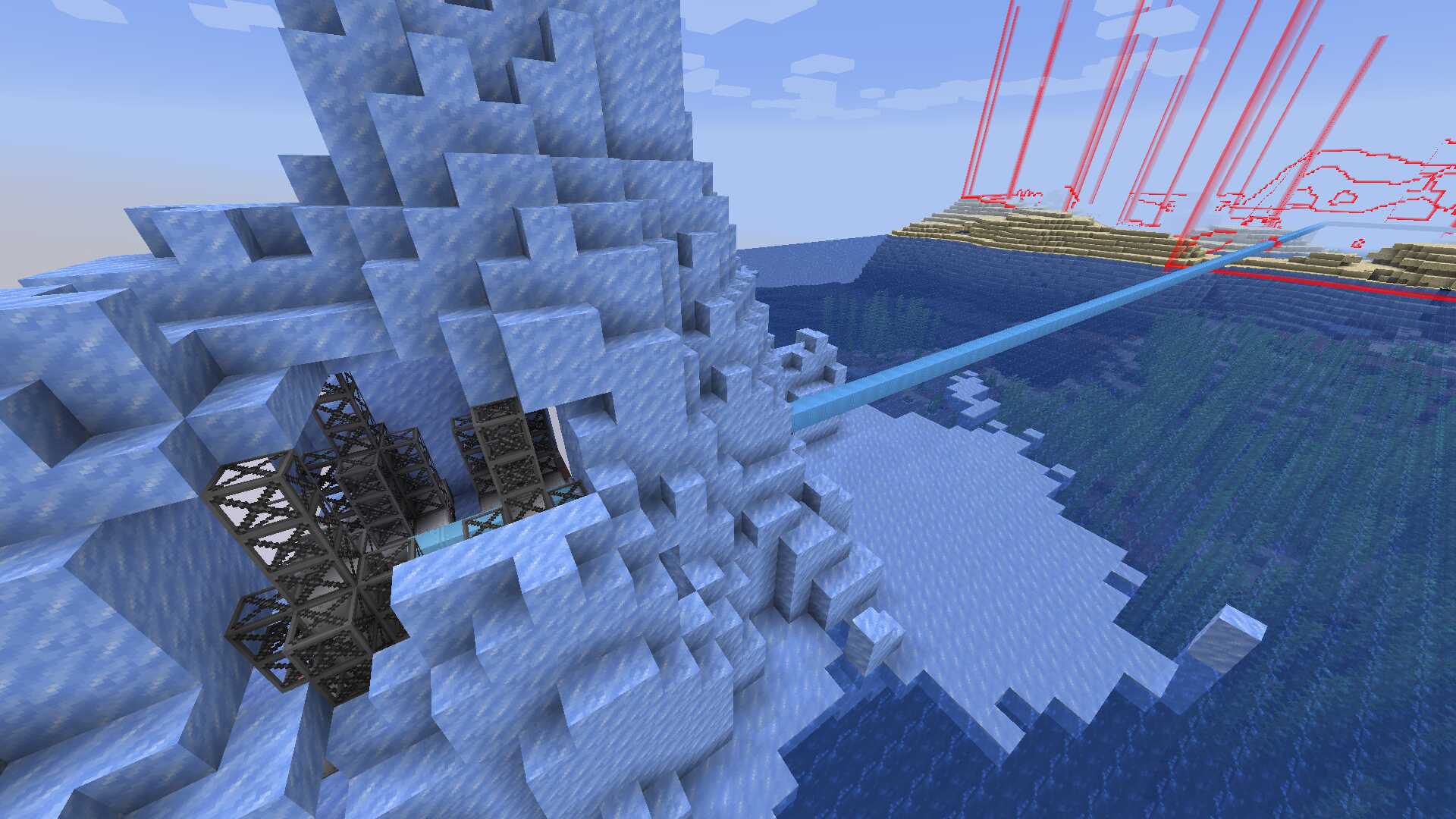
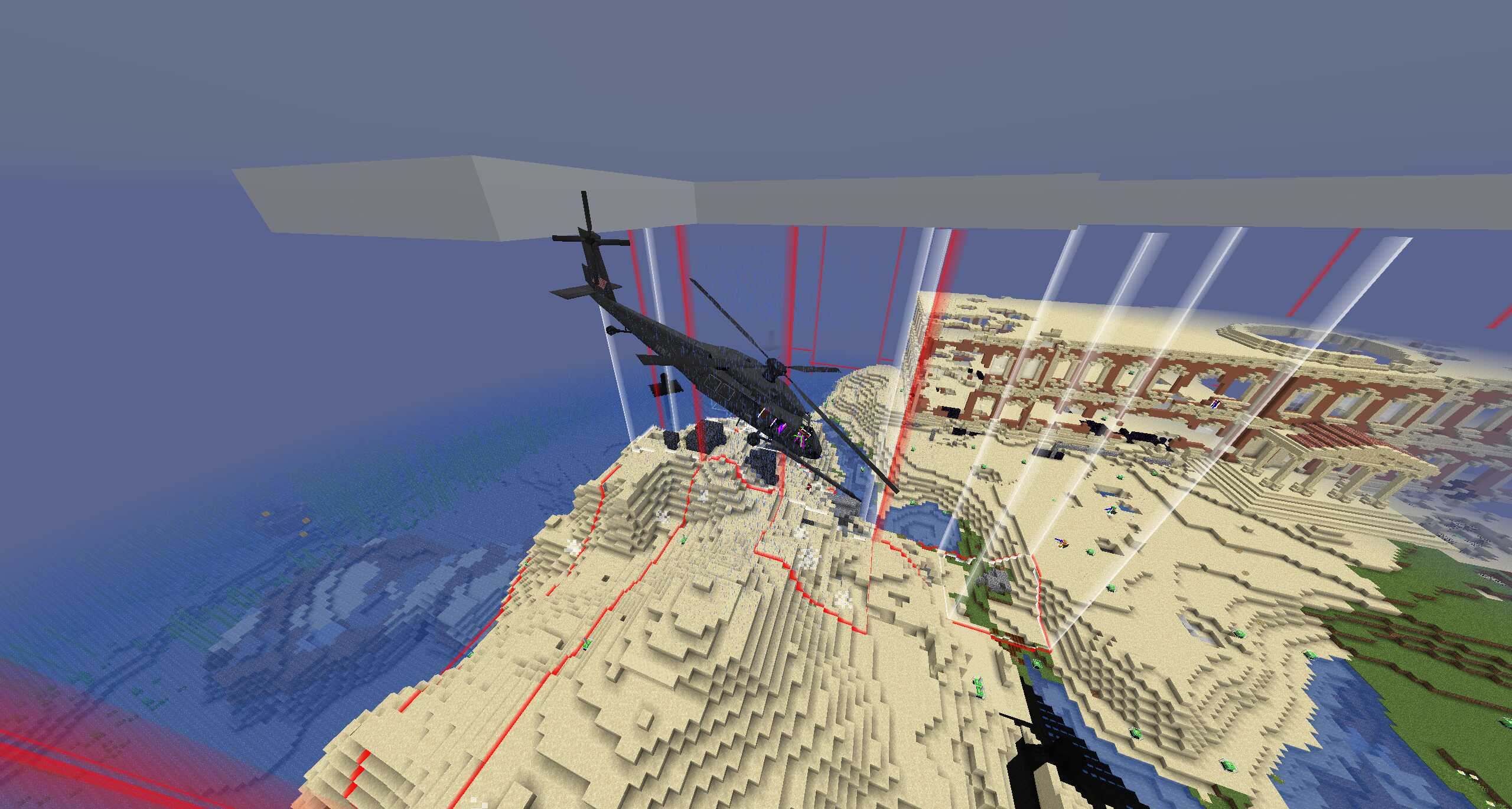
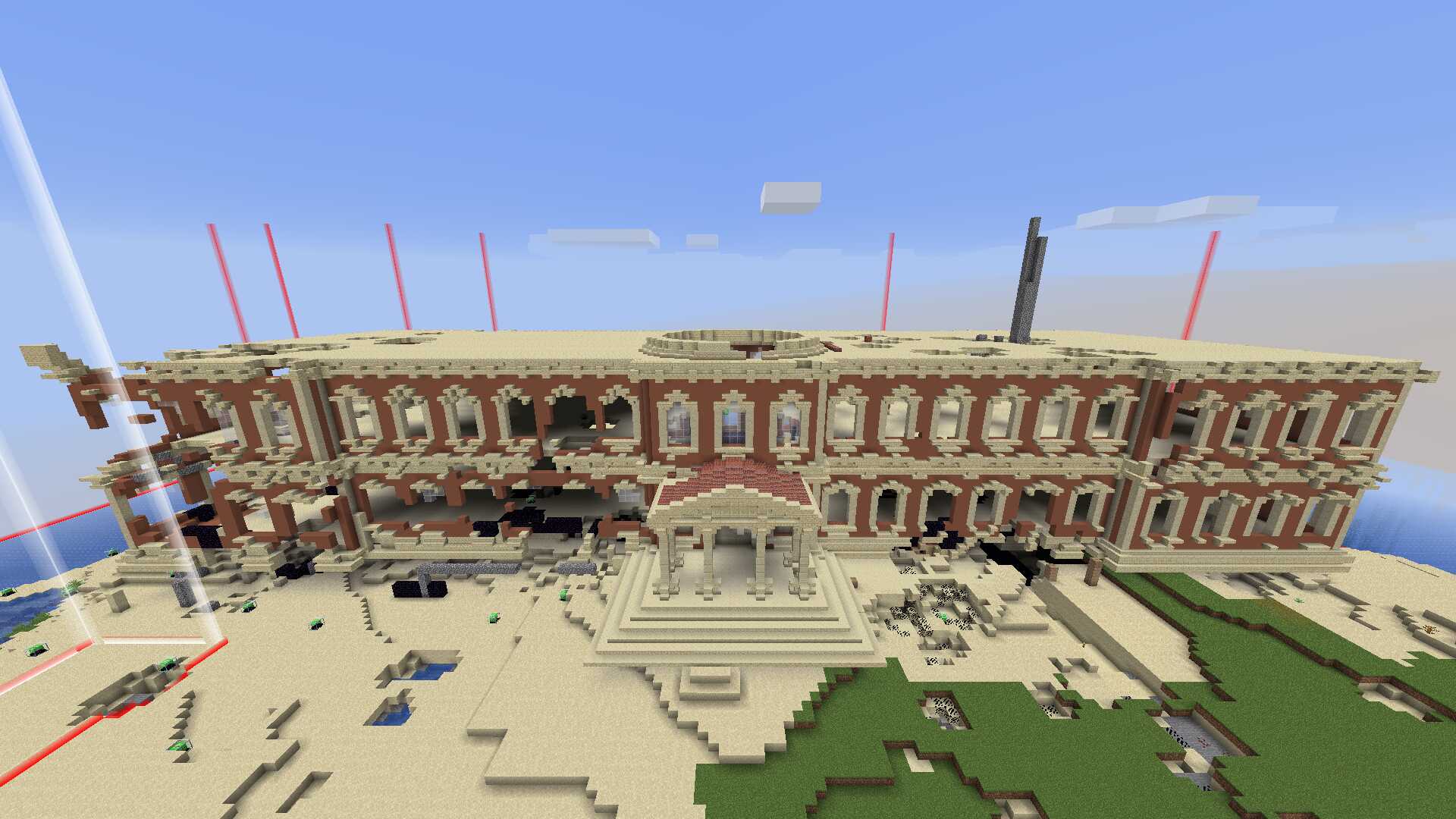
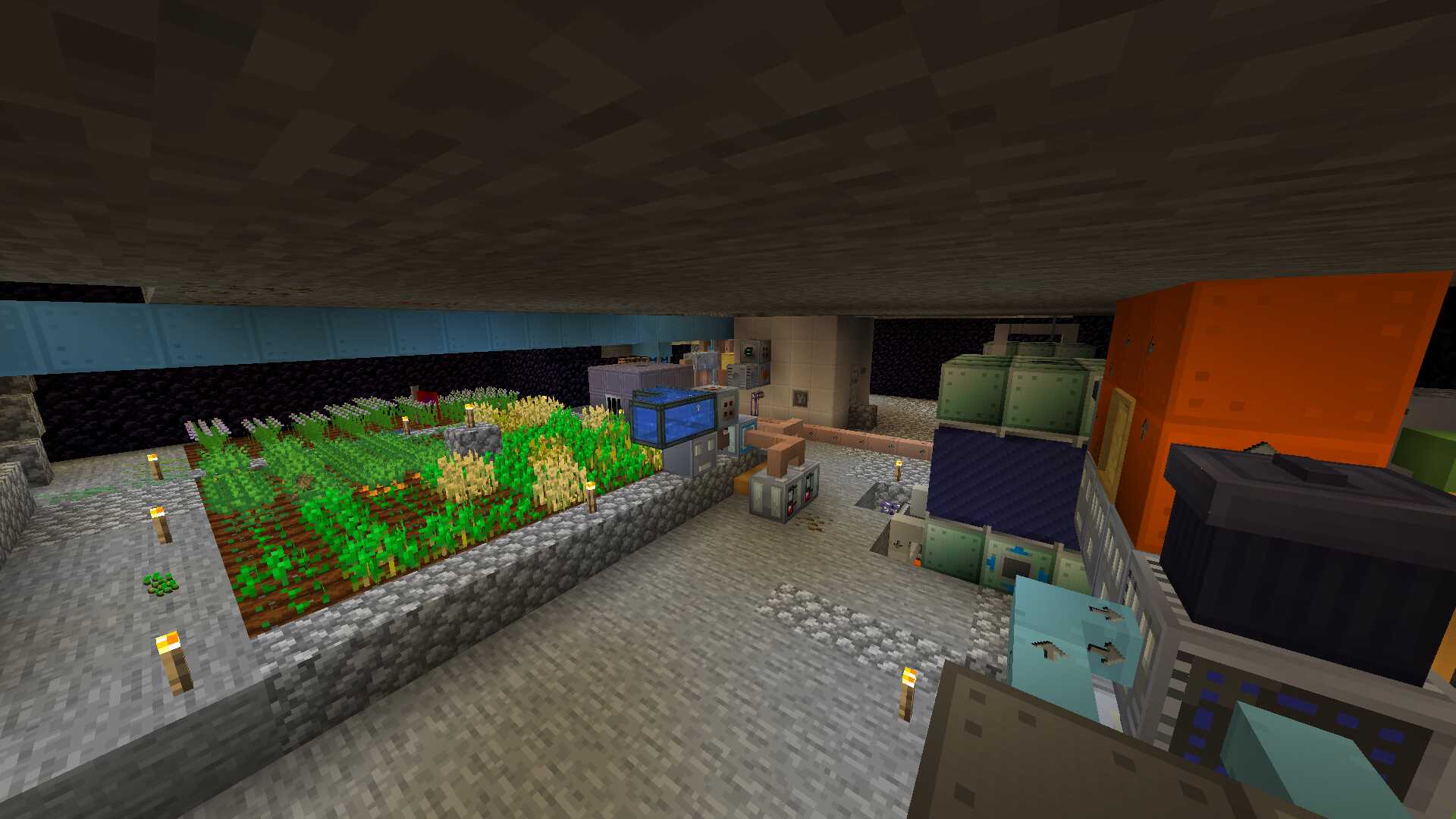
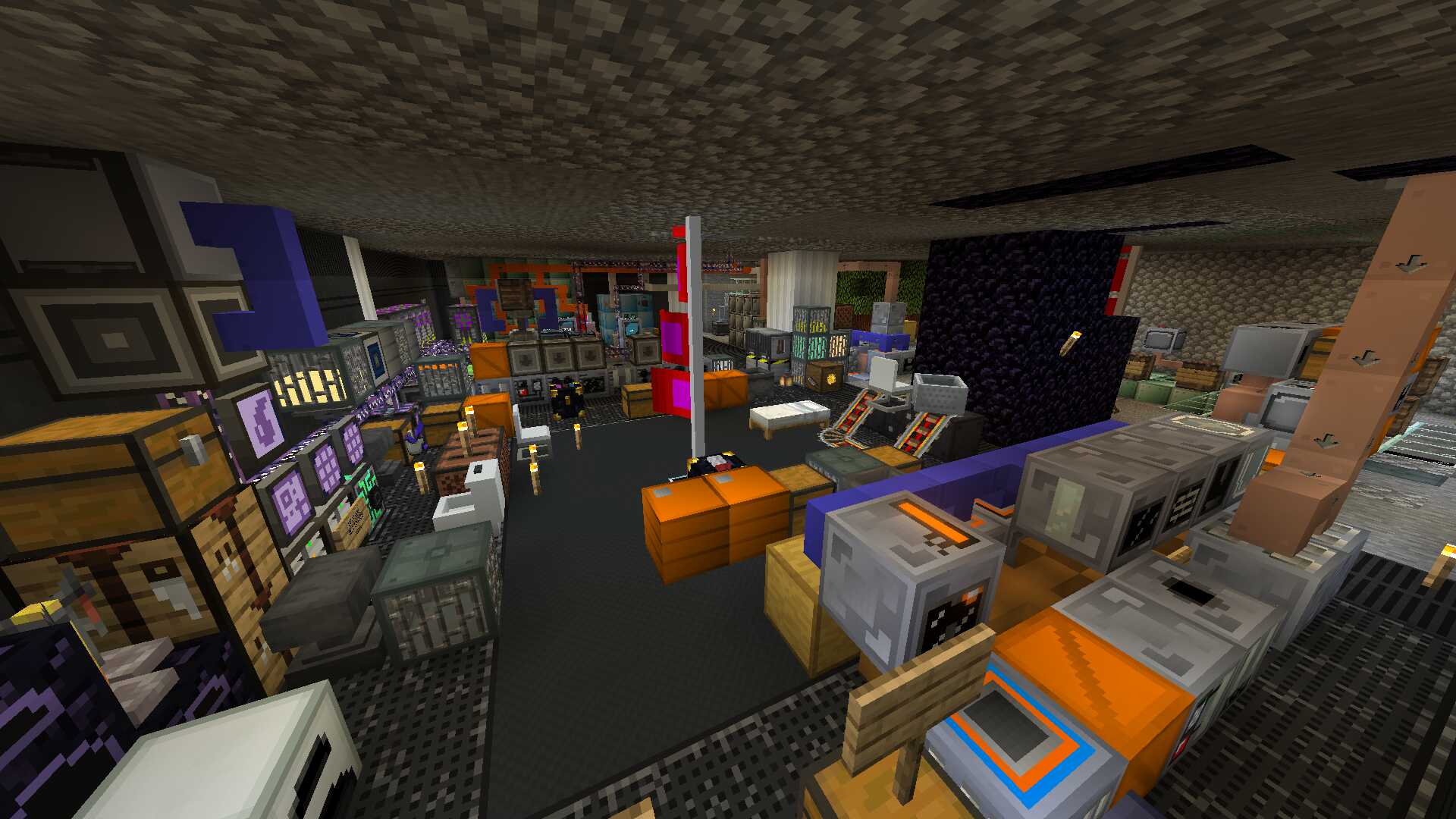
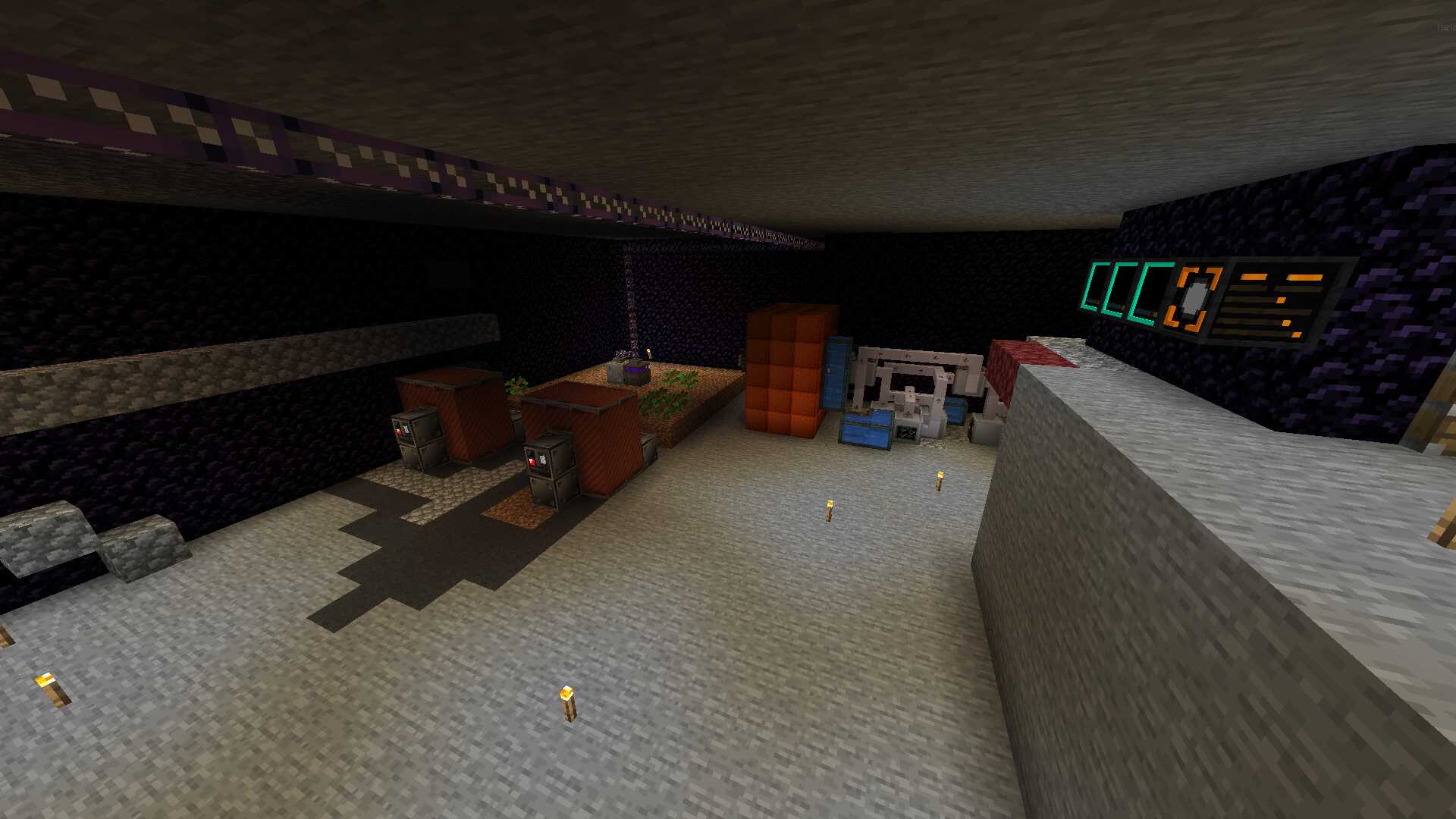
Warfactory was born from disappointment with the faction event landscape. Or with what it used to be.
Years ago, during the era of IGoByLotsOfNames making Minecraft videos, a small cottage industry emerged out of scattered Discords and groups, all of them chasing the same thing: the best PvP Minecraft server built on GregTech and the wider GregTech ecosystem.
Igblon, the shorthand everyone uses, ran GregTech semi-anarchy servers, recorded them, and published the results to YouTube. The two that mattered most were the Nomifactory 100 player event, built on Nomifactory, a GregTech pack centred on simplified progression; and the Supersymmetry event, run on an older build of Supersymmetry, a build he had developed himself in the early days, and one still far more oriented toward PvP than anything the pack has shipped since. The community that grew up around those videos turned into a cult following in its own right. I came up in it, he is a friend, and I am strongly inspired by him.
He eventually left, for a lot of compounding reasons, and the wider team took Supersymmetry somewhere else entirely, out of PvP altogether and toward PvE and scientifically realistic progression. My read is that they were unwilling to solve the underlying problems of GregTech modded PvP. The difficulty won. The imitators who came afterwards were mostly of poor quality; the Hecuba Chaostech event is one example.
I have spent a long time sitting in that community working out why so little of it survived. This is what I’ve concluded, and what Warfactory does about it.
A project this size is a game, not a modpack
The core mistake is that these projects act like they are making a modpack.
That framing is wrong. A modpack at this scale is technically just a game built on Minecraft. When you replace the entire progression system and the entire combat system, you are not assembling a modpack. You are building a game on top of Minecraft, the same way you’d build one in Unity.
Approach it from that direction and the whole incentive structure of the project changes. You are no longer slapping mods together, getting them to roughly work, and publishing. That is what shovelware does: asset store libraries, asset store art, minimum effort. When you are building something that has to survive a lot of players hitting it at once, you have to start from scratch. Custom systems. Deliberate, purposeful work.
That is where almost everyone drops off, because at that point it actually takes effort. People think of a modpack as a throwaway thing. Something a kid messes around with for fun. It absolutely can be that, and the bar to entry is lower than an asset flip. But carrying that mindset into a serious project is why so many never ship, or ship something genuinely low quality.
The Igblon sphere powered through this for two reasons. First, it had a publicizer: Igblon himself, the popular figure who put everything in front of an audience and pulled a crowd in behind it. Second, it had pre-made packs that had already stood some test of time; they had been played, so they were at least somewhat vetted.
The catch is that they had never been vetted in a PvP context. Progression was fine. The PvP was terrible.
Which points at the deeper problem: Minecraft’s PvP is inherently bad, and it is nothing like what you actually want from a PvP game.
What we are actually trying to build
Warfactory is going after combined arms warfare.
That is a specific and unusual branch of military games. Arguably the broadest thing you can attempt short of true military simulation. Very few games try it, because it is inherently hard and enormously time consuming.
Most games we play only handle infantry, and handle it arcadeily. If vehicles aren’t in the picture, and the surrounding systems aren’t in the picture, then the arcade version is simply what you end up designing. Counter-Strike is the purest example: it never has to think about vehicles or long-range engagements. It considers raycast hit detection, timing, and small maps. It is not trying to simulate a battlefield.
Battlefield itself is the closest mainstream attempt at combined arms, but it gamifies heavily. Nothing in it worries about long-term maintenance, production, team cohesion or squad tactics. Project Reality pushed against that and ended up spawning an entire niche of its own: the milsim genre, which is where Squad comes from. Arma is the closest thing to a real combined arms game we have, and probably always will be, because it is genuinely trying to simulate the thing.
Arguably Warfactory is going beyond what even milsims support. The factory aspect, the second half of the project, is never actually realized in any game that also tries to ship proper combined arms warfare.
Warfactory sits in a strange position between those poles. On one side we want to be a Minecraft modpack. On the other, we are cramming combined arms warfare into an engine that is willfully unprepared for it. Proper hitboxes: not supported. A vehicle framework: not supported. Real physics: not supported. The entire engine is unready, so getting anywhere at all takes serious effort.
The systems that fight us
Inventory, and the logistics nobody models
Inventory is probably Minecraft’s most complained-about feature, because it doesn’t fit any use case, not even the ones the game itself now demands. People building large structures want to carry more, and the inventory is far too small for it. Shulker boxes, also known as proto-backpacks, became the staple precisely because they were a simple patch that alleviated some of the pain. Bundles were the next attempt, and as far as I can tell they failed.
Our problem is the opposite one. You can carry multiple stacks of ammunition. You can carry an entire battalion on your back.
Most mods simply do not think about logistics. They think about Minecraft, and they fit themselves to Minecraft’s status quo. So a tank becomes an item you deploy by hand. That makes perfect sense in a game where you pick up a boat and set it down again. But from a combined arms perspective it is nonsense, because logistics is the single biggest constraint on real warfare, and it is never modelled here. One person carrying ten tanks, crates of ammunition and seven guns is a deployable army. It breaks immersion and it destroys any balance between attacking and defending.
Attacking, defending, and the obsidian problem
So how do you balance attack and defense?
Minecraft lets you do anything. Any block can be broken by hand, or with a pickaxe. That is wonderful for a sandbox and ruinous for defense, because if everything yields to the most basic verb in the game, there is no problem left to solve. This is why nearly every server, even vanilla ones, runs anti-griefing scripts.
Explosives don’t rescue it either. TNT in Minecraft is so underdeveloped that it is arguably worse than breaking blocks by hand: you get no control over the shape of the breach, no projectile you can send at range, and it has to be placed by hand. Until recently you couldn’t even control what an explosion returned to you. On top of that, blast resistance is calculated so primitively that obsidian is the only material that matters. There was never any real progression between “breakable” and “obsidian”: one single TNT block, and a scaling system that is effectively binary.
The result is that every faction environment which tried to build real destruction and real siege mechanics converged on the same thing: everything made of obsidian. Everybody could get obsidian in bulk. It took labor, but it was always possible.
And that leaves you stuck. With protection scripts, raiding becomes unfair. Obsidian resists explosives so well that there is no way to burst a wall. Without them, the only remaining option is a group of players pickaxing through. It is slow and tedious, and more importantly it isn’t fun. Nobody wants to spend thirty minutes mining through a ten-layer obsidian box. Either way the defenses aren’t truly impenetrable, they can always be broken, just never enjoyably.
I am not arguing for either extreme, since the whole thing is a paradox. What I want is a proper, fleshed-out explosion system, and scaling that blurs the binary we have today.
An infinite world nobody can find you in
Then there is the map. If the world is infinite, how does anyone find anyone?
Plenty of servers shrink the map drastically to force interaction, because Minecraft is a deeply solitary game by default. You never actually need to talk to another player. Some try to solve it with economy systems instead, but I think those fall short, because Minecraft lets anyone procure anything.
One thing can always be banked on: in a PvP environment, people will always try to harass and attack each other. That is the bread and butter. It is what is supposed to happen, and it always will, because it plays to a natural fear of the unknown. You don’t know what the other team is planning, so being prepared and holding an upper hand over a possible enemy takes priority.
Shrinking the map so everyone sits in a known location is an interesting mechanic, but I don’t think it’s a good solution either. Being able to stay hidden matters. So does forcing players to run recon: to build systems for spying, to gather information before committing to anything, and to strategize around what they know. That is a genuinely important part of what I’m trying to build, and Minecraft’s nature makes it challenging.
We could of course just let players query another team’s position directly, but where is the fun in that?
The shitbox meta
All of this converges on what we call the shitbox meta: the loop that emerges by default on every single server, and one of the least fun gameplay loops I can imagine.
You’re a new faction, so you go somewhere awkward and undisclosed, far from spawn, and you build a base, usually a box underground, low-profile enough that nobody walking past will spot it. You put together just enough defense to absorb pressure. Minimal pressure, mind you; it doesn’t have to be good or thought out.
Then you start running recon. Since the only method Minecraft offers that isn’t an exploit is walking around and hoping, you wander until you find a clue that someone was somewhere. What you eventually spot is another underground box. You raid it with the cheapest thing available, mostly to intimidate.
And it works, because everyone already assumes that being found means sustained attacks they cannot defend against: there is no mechanism that forces an attacker to escalate beyond the cheapest explosives available. So the defenders’ instinct is to pack up and leave, losing time and progress.
Then you go home and worry about the same thing happening to you: a small group teleporting in, unpacking a battalion out of shulker boxes, dumping an absurd quantity of explosives on your base. Your only real option is to move.
That is stupid game design. It does not work. And I think it is why those servers failed. They never worked out what they were trying to achieve. If you want combined arms warfare, you have to actually build those systems, and make the default Minecraft systems work alongside them, or at least constrain the damage they do.
There are smaller versions of the same failure everywhere. Name tags render through walls, so you cannot hide behind cover. Combat logging was never solved. Transport is slow enough that people lean on teleportation, which wrecks both the immersion and the logistics I’m trying to build.
Why do it this way?
A fair objection: perhaps we could take this in a different direction. Why fight to get combined arms working at all? Why do it in Minecraft in the first place? Just play Arma.
First, Warfactory is not a milsim. It wants to be a factory and military simulator at once, and that combination is the whole point.
Players want both halves. There is something genuinely appealing about a supply chain you built yourself, which you then use to wage a war with. Wargames worked this out a long time ago: Command & Conquer and everything descended from it run on exactly that loop, where you raise production first and fight with what it produces. But because the idea is so hard to execute, it never left the strategy genre. It stayed top-down and abstracted, always at a distance.
Closing that distance is the hard part, because it demands an extremely dynamic, interactive world. Minecraft scores perfectly there. Voxels keep everything modifiable and alive while staying reasonable to develop against, and Minecraft already does everything a voxel game needs, so there is no custom infrastructure to build first. Well, not as much as a custom engine would need.
This is also why Arma isn’t the answer. I do love me some Arma, but it cannot achieve what I envision, or what players genuinely seek. Minecraft has two foundations that make it what it is: infinite procedurally generated worlds, and a world the player can freely mutate. Arma is built on the premise of a single, mostly static map. That works great for a milsim. For a factory and milsim hybrid it is not sufficient. The world interactivity a voxel game gives you is beyond anything else out there.
Then comes the next question: with a world that large and that distributed, how do you expand on the idea? Counter-Strike-style gameplay does not work at this scale. Those designs are fine on small static maps. They fall apart on large dynamic ones.
So you go to the closest reference material available, which is real life, and therefore to military simulators. That is where the pattern becomes obvious: logistics are king. Logistics are what win wars.
Which closes the loop, because logistics is resource management, and resource management is the factory game. The two halves of Warfactory are not two games bolted together. They are the same system seen from opposite ends, and combined arms is simply the natural direction for it to grow in.
I don’t believe anyone has genuinely attempted this before. That is what makes Warfactory unique, and it is also what makes it hard: we are building a path forward without a real predecessor that did the things we are doing.
Rebuilding the core
The real solution is to redesign Minecraft: take its core principles and bend or reshape them until they serve combined arms warfare.
Weight
First, the game needs a proper weight system, because in every other combined arms game weight is the primary thing constraining the player.
Inventory slots can’t do this job. An item is an item; one item takes one slot, and you can’t tune that per item. You can lower stack sizes, but infinite shulker boxes make that irrelevant. You can lean on volume: fill an inventory with unstackable magazines and you’ve only a few slots left for anything else, but I don’t think that’s foolproof either. None of it actually penalizes bringing more. You can still bring a lot, and nothing pushes back.
So we built the weight system. Assign a weight to any item you like, and players have to choose their loadouts and decide what is worth carrying. That single change pulls a lot of strategy in with it. Logistics start to matter. Vehicles become worthwhile for their carrying capacity. Bringing more players with dedicated roles increases what your group can move. Building forward operating bases and pre-stocking them becomes a real way to get materiel to the front line.
Vehicles that stay where you put them
Vehicles need the same treatment. The only workable answer I see is that a vehicle is deployed once. You cannot pick one up and walk off with it. It gets deployed a single time, by a machine or system that itself can’t easily be moved, which means that once a vehicle is somewhere, it stays there unless it drives itself somewhere else.
That brings its own problems, since Minecraft’s world isn’t built for vehicles: oceans everywhere, continents that don’t connect, noisy ground, gradients that are far too aggressive. But that can be smoothed over by changing how the world generates and tailoring the terrain toward vehicles, including procedurally generated basic infrastructure like roads.
The siege system
The hardest piece is the siege system, which is why we forked Warforge.
The goal was to find a system that discourages offline raiding, discourages purely passive warfare, and rewards active engagements where bad preparation has consequences. That balance is genuinely difficult. Make defenses impenetrable and anyone who rushes one is safe forever. Give attackers the advantage and they can sit on an enemy, disrupt them endlessly and simply become a nuisance.
Warforge answers it with commitment. To break anything, you have to initiate an attack, you can’t lob a few missiles from a distance, harass people until they give up, or have a one-man army fly in a fleet. Starting a siege means being on site and actively causing disruption: killing players, or pressuring them into hiding in a box where they can’t accomplish anything. Both count, because progress is measured either in kills or in time spent exerting yourself on their turf. And you have to genuinely be there. Not offline, not AFK. Present.
Defenders are protected until a siege begins, and they are notified when it does. They fight back by killing attackers. Teleportation is disabled, so dying far from home costs you the travel back, and reinforcing means physically moving players from the back line to the front. Combined with weight, you now have to plan how equipment reaches the fight at all.
To kill the cat-and-mouse pattern, players can’t easily relocate during a siege. If you’re being attacked, you are pinned, and you defend until the attackers run out of resources or time.
If attackers fail, they take a penalty and can’t attack again for four to five minutes by default, though that’s configurable. That matters, because it gives defenders a window where they can feel safe. To move, to reinforce, or to counterattack. Rearming times and the general expense of warfare have to be tuned alongside it, so that follow-up attacks aren’t trivial even once the timer expires. War should cost something.
Radar: how you find a base
Players also need a way to locate each other, which means deconstructing what a base actually is. A base is a cluster of machines.
So that’s what WF Core’s radar looks for. It takes the global map of machines, including those in unloaded chunks, filters down to the higher-tier ones, runs the result through DBSCAN, derives bounding boxes from the resulting clusters, and counts how many players are inside each box.
Every part of that is deliberate. Scoring clusters by the cost of their contents tells you which base is on top, and therefore which is worth attacking: the most disruptive target, and the one most capable of attacking you. It also lets you measure yourself against other bases without handing anyone an unfair advantage. The player count tells you how much resistance to expect, and reveals bases that have been abandoned.
The result is that you can find a base reliably, and at a material cost.
Scarcity has to be built out of time
That cost leads to the economy, and to the fundamental problem with GregTech servers and modded PvP generally: nothing in Minecraft is truly scarce. Once a system is automated, it only costs time.
Time and human labor are the only genuinely limited things. So if you want something to have a real cost, that is what you design around.
This is why the radar demands more than raw resources. It needs a lot of them, arranged in a complicated structure that resists easy automation, and it needs calibration satellites, placed far from the dish itself, randomized on every rescan. There is no way to automate that without autonomous agents like ComputerCraft drones, which we don’t allow. Somebody has to spend their time travelling out, deploying the machine, and coming back to start the scan. Several machines are involved, so nobody is running endless scans every hour.
Power is easy to produce. Materials are easy to produce, the game is built to make them easy. What you cannot automate is a person going somewhere and putting a machine down. A lot of the wider design leans on exactly this: the player’s time is the truly indispensable currency in an environment like ours.
The same thinking extends to the map. Some resources exist in limited quantity in fixed locations. If an area is already contested, you can’t get at them without fighting, which produces genuine resource wars. I think that is good design, because it makes specific terrain worth more, and every team wants access to the best or the rarest materials to gain an edge. It forces interaction.
That requires tighter control of the map, which we’ve been working on. The decision is a deliberate continent system: a limited number of very large continents, effectively big islands, linked by procedurally generated basic infrastructure such as roads.
Infantry combat
Infantry combat in Minecraft isn’t good. It amounts to left-clicking someone to death with very little strategy behind it, because the player is extraordinarily robust. You can absorb an enormous number of hits, for a long time, and heal very quickly. The result is boring and slow. A marathon, not a sprint.
Combined arms games and military simulators almost all use a very short time to kill, and it matters enormously, because it makes strategy more important than clicking faster or right-clicking a heal sooner.
So Warfactory’s infantry combat has a very short time to kill. It is punishing, and it is paired with an advanced medical system modelled on the medical simulation in ACE3, the Arma mod.
Removing what fights us
Because this is a game rather than a modpack, you also have to take control of every other system in it, and make sure none of them cut across your own.
We removed most potions and most status effects, along with the items that caused problems. We removed the brewing system. We removed the third-person camera, since it changes what you can see and hands out an unfair advantage. There are others, too many to list individually, but those are the clearest examples.
Nobody thinks of potions as a problem until someone finds a genuinely bizarre exploit with them in a modded environment. Enchantments are infamous too. They’re badly broken, and they feed directly into the pool-noodle slap fight that vanilla combat is plagued by.
What we have actually run
None of this is theory we have never tested.
In 2024 we ran the first Warfactory, on 1.12.2. It was primitive next to everything described above, and it was a success regardless, enough of one to justify going further.
Warfactory 2, its 1.12.2 successor, got stuck in development hell and was eventually cancelled. Rather than keep pouring time into it we moved to 1.20 and built Warfactory Lite: a smaller spinoff, made deliberately to test the waters and put these theories in front of real players without betting everything on them first. It ran for ten days from 3 August 2026, and it was a bigger success than the original.
The current Warfactory, on 1.21.1, follows from that. One thing worth stating plainly, because the names invite the assumption: the 1.12.2 packs have nothing to do with this attempt. It was started fresh, not carried over from either codebase.
HBM’s NTM, and a community we ended up splitting
One thing worth explaining, because it confuses people.
Early on we decided to build on HBM’s NTM, the Nuclear Tech Mod, which meant porting it to 1.12.2, since that was where we needed it. Our plans have changed since: the main modpack will not feature NTM.
By that point, though, the effort had taken on a life of its own. It had grown into a large enough movement that the first ever complete port of HBM off 1.7 surfaced because of it. When our plans changed we could have let that wither, or actively suppressed it. Instead we embraced it, and we now maintain HBM’s NTM: Community Edition along with other versions, purely out of goodwill. The honest motivation is simple: I want to see that mod living somewhere other than 1.7.10. That work is still going, NTM: NEXT is our port to 26.2.
NTM isn’t leaving the wider project either. Several of our developers are building a separate modpack on top of the Warfactory mods with NTM at its centre rather than GregTech. It just isn’t where my own focus is.
The consequence is that the community is bifurcated, split between our modern line and the 1.12.2 NTM line. That is genuinely annoying to deal with. But in the grand scheme of things I think it says the right thing about how we operate: our dedication is to the Minecraft space, not only to our own project.
Where this is going
Everything above is built inside Minecraft, and Minecraft is ultimately the constraint on all of it. Every system in this article exists because the engine underneath refuses to do what a combined arms game needs. The long-term plan is to stop fighting it.
We intend to move Warfactory onto a dedicated voxel engine, one built around spatial threading and the other foundations this kind of game genuinely requires, so that Warfactory can become a proper standalone game, rather than a project permanently wrestling with an engine that was never meant for any of this. That engine is being developed by Igblon himself. Easier said than done, but a man can dream, right?
That is where things stand today. I’ll expand on all of it in the future, but these are the core tenets Warfactory works by, developed over years of sitting in this community and trying to understand what was wrong with it.